Retail Import Tariff Duty (7.5%–25%), Ocean Freight-In & Total Landed Cost Gross Margin Formula: 6 Customs Audit Rules
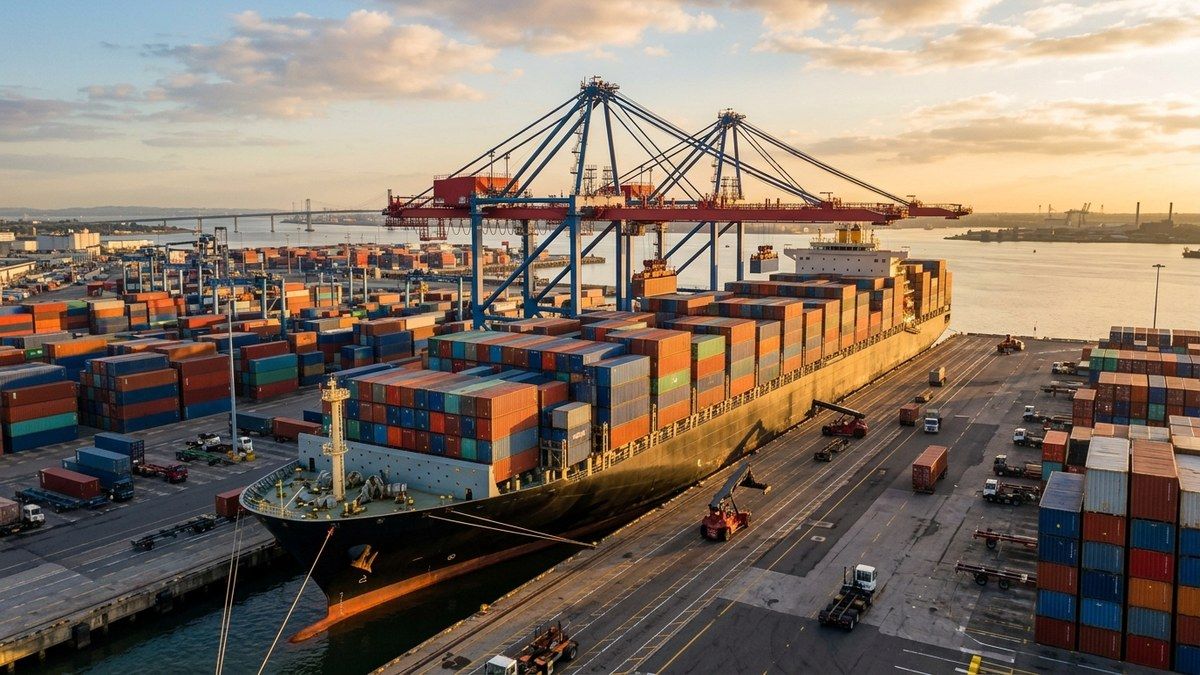
Core Takeaway: Basing retail pricing on factory FOB cost hides customs duties, Harbor Maintenance Fees, Merchandise Processing Fees, and container freight-in. When a \( 15\% \) Section 301 tariff shock hits a \( \$42.00 \) FOB SKU priced at \( \$100.00 \) MSRP, gross margin drops from \( 58.0\% \) FOB down to \( 48.2\% \) landed unless you re-price to \( \$123.33 \) using the pass-through formula.
Retail buyers and merchandise planners frequently approve purchase orders using factory Free on Board (FOB) quotes, only to discover at quarter-end that realized gross margin missed target by 800 to 1,200 basis points. Under standard accrual accounting, inbound freight, customs duties, and port drayage are capitalizable inventory costs rather than period operating expenses. When tariff rates swing between \( 7.5\% \) and \( 25\% \), treating FOB cost as your cost of goods sold distorts both unit economics and open-to-buy budgets.
Use the retail margin calculator alongside the exact landed cost equations below to audit every Harmonized Tariff Schedule (HTS) line item before issuing a purchase order.
The Total Landed Unit Cost and Pass-Through Equations
To capture every dollar required to bring an imported SKU from the foreign port onto your domestic warehouse floor, compute total landed unit cost \( C_{\text{landed}} \) as the sum of dutiable value multipliers and per-unit freight allocation:
\[ C_{\text{landed}} = C_{\text{FOB}} \cdot (1 + r_{\text{duty}} + r_{\text{HMF+MPF}}) + \frac{F_{\text{ocean}} + F_{\text{drayage}}}{N_{\text{units}}} \]In this equation, \( C_{\text{FOB}} \) is the factory invoice price per unit, \( r_{\text{duty}} \) is the combined base MFN plus Section 301 tariff rate expressed as a decimal, \( r_{\text{HMF+MPF}} \) is the combined U.S. Customs Harbor Maintenance Fee and Merchandise Processing Fee rate, \( F_{\text{ocean}} \) is total ocean container freight and marine insurance, \( F_{\text{drayage}} \) is port-to-warehouse drayage and customs brokerage, and \( N_{\text{units}} \) is the sellable unit count in the shipment.
Once you have the updated landed cost \( C_{\text{landed,new}} \), solve for the exact retail price \( P_{\text{new}} \) required to protect your target gross margin percentage \( \text{GM}_{\text{target}} \):
\[ P_{\text{new}} = \frac{C_{\text{landed,new}}}{1 - \text{GM}_{\text{target}}} \]Notice that dividing by \( 1 - \text{GM}_{\text{target}} \) preserves the percentage margin on the selling price rather than applying a flat dollar pass-through. Adding only the dollar tariff increase to MSRP still compresses your gross margin percentage because the denominator grows while gross profit dollars stay flat.
Worked Example: Quantifying a 15% Section 301 Tariff Shock
Consider a retail apparel SKU with an MSRP of \( \$100.00 \) and a factory FOB price of \( \$42.00 \). On a naive FOB basis, the buyer assumes a \( 58.0\% \) gross margin because \( (\$100.00 - \$42.00) / \$100.00 = 0.58 \). Now layer in real customs and freight-in charges for a \( 1,000 \)-unit shipment: a \( 15\% \) Section 301 tariff (\( r_{\text{duty}} = 0.15 \)), \( 0.5\% \) combined HMF and MPF (\( r_{\text{HMF+MPF}} = 0.005 \)), \( \$2,490.00 \) in ocean freight, and \( \$800.00 \) in port drayage.
Substituting these figures into the landed cost formula yields:
\[ C_{\text{landed,new}} = \$42.00 \cdot (1 + 0.15 + 0.005) + \frac{\$2,490.00 + \$800.00}{1,000} = \$48.51 + \$3.29 = \$51.80 \]If the retailer leaves MSRP flat at \( \$100.00 \), realized gross margin compresses from \( 58.0\% \) FOB down to \( (\$100.00 - \$51.80) / \$100.00 = 48.2\% \) landed. That is a \( 9.8 \)-percentage-point (\( 980\text{ bps} \)) margin erosion. To restore the original \( 58.0\% \) gross margin target, the pass-through price must rise to \( P_{\text{new}} = \$51.80 / (1 - 0.58) = \$123.33 \).
| Cost & Margin Scenario | FOB Cost | Duty & Fees | Freight-In / Unit | Landed Cost | MSRP | Gross Margin |
|---|---|---|---|---|---|---|
| Baseline FOB Estimate (Unadjusted) | $42.00 | $0.00 | $0.00 | $42.00 | $100.00 | 58.0% |
| 7.5% Tariff + Freight (Flat MSRP) | $42.00 | $3.36 | $3.29 | $48.65 | $100.00 | 51.4% |
| 15.0% Tariff Shock (Flat MSRP) | $42.00 | $6.51 | $3.29 | $51.80 | $100.00 | 48.2% |
| 15.0% Tariff Shock (Full Pass-Through) | $42.00 | $6.51 | $3.29 | $51.80 | $123.33 | 58.0% |
| 25.0% Tariff Tier (Flat MSRP) | $42.00 | $10.71 | $3.29 | $56.00 | $100.00 | 44.0% |

Rule 1: Separate Dutiable Customs Value from Non-Dutiable Freight
Customs duties apply strictly to the entered customs value—typically the transaction value or FOB factory invoice price—rather than the ocean freight bill. However, tooling charges, molds, and design assists paid separately to the supplier are legally dutiable additions to \( C_{\text{FOB}} \). Always verify your commercial invoice separates international ocean freight from ex-factory product value so you do not accidentally pay \( 15\% \) or \( 25\% \) duty on shipping charges.
Rule 2: Stack Base MFN Rates Under Section 301 Tiers
Section 301 tariffs of \( 7.5\% \), \( 15\% \), or \( 25\% \) do not replace your product's Most Favored Nation (MFN) Column 1 duty rate; they stack directly on top of it. An apparel item carrying a \( 12\% \) MFN base rate plus a \( 15\% \) Section 301 surcharge carries an effective \( r_{\text{duty}} = 0.27 \). Audit the full 10-digit HTSUS classification on the USITC Harmonized Tariff Schedule before locking seasonal retail prices.
Rule 3: Include HMF and MPF on Every Ocean Entry
Every ocean container entering a U.S. port incurs the Harbor Maintenance Fee (HMF) and Merchandise Processing Fee (MPF), which together add roughly \( 0.47\% \) to \( 0.50\% \) of entered value (subject to statutory MPF minimum and maximum caps per formal entry). While \( 0.5\% \) looks minor on a single item, on \( \$2,000,000 \) in annual imports it represents \( \$10,000 \) in unbudgeted cost of goods sold.
Rule 4: Allocate Ocean Freight and Drayage by Cubic Volume, Not Headcount
Dividing \( F_{\text{ocean}} + F_{\text{drayage}} \) equally by total unit count \( N_{\text{units}} \) works only when a container holds a single homogeneous SKU. For mixed-SKU containers, allocate freight-in by cubic meter (CBM) share so bulky, low-price items absorb their true container footprint rather than being subsidized by compact, high-margin accessories.
Rule 5: Model Wholesale Keystone Multipliers on Landed Cost
If you sell both direct-to-consumer and wholesale, wholesale buyers typically demand a \( 50\% \) keystone margin off MSRP. When \( C_{\text{landed,new}} \) rises from \( \$42.00 \) to \( \$51.80 \), a flat \( \$100.00 \) MSRP forces your wholesale price of \( \$50.00 \) below your landed cost—creating a negative \( -3.6\% \) wholesale margin. Always test wholesale viability at \( 50\% \) of \( P_{\text{new}} \) before accepting department store purchase orders.
Rule 6: Re-Run Landed Margin Audits at Every Freight Rate Renewal
Spot ocean container rates and chassis drayage surcharges fluctuate quarterly. Set a recurring calendar trigger to update \( F_{\text{ocean}} \) and \( F_{\text{drayage}} \) in your ERP and retail margin calculator whenever a forwarder contract renews, and flag any SKU whose landed gross margin slips more than \( 200\text{ bps} \) below category target.
| Customs Audit Rule | Primary Formula Variable | Common Accounting Mistake | Corrective Control |
|---|---|---|---|
| Rule 1: Dutiable Value Split | \( C_{\text{FOB}} \) | Paying duty on CIF freight | Require itemized FOB commercial invoice |
| Rule 2: Duty Stacking | \( r_{\text{duty}} \) | Using Section 301 rate alone | Sum MFN base rate plus Chapter 99 rate |
| Rule 3: Port Fee Inclusion | \( r_{\text{HMF+MPF}} \) | Expensing customs fees to SG&A | Capitalize HMF and MPF into unit cost |
| Rule 4: CBM Freight Allocation | \( (F_{\text{ocean}} + F_{\text{drayage}}) / N_{\text{units}} \) | Equal per-unit split on mixed SKUs | Allocate container cost by carton CBM |
| Rule 5: Wholesale Stress Test | \( P_{\text{new}} \) | Holding MSRP flat on wholesale lines | Verify 50% keystone clears landed cost |
| Rule 6: Contract Rate Sync | \( \text{GM}_{\text{target}} \) | Annual-only cost rollups | Re-audit landed GM every freight renewal |
Step-by-Step Customs Margin Audit Checklist
- Verify HTS Classification: Confirm the 10-digit HTSUS code and any applicable Chapter 99 Section 301 surcharges before finalizing vendor POs.
- Lock Dutiable Assists: Add amortized tooling, molds, and packaging paid outside the factory invoice into \( C_{\text{FOB}} \).
- Compute Freight-In Per Unit: Sum ocean freight, marine insurance, port drayage, and customs brokerage, then divide by sellable units or CBM share.
- Check Flat-MSRP Compression: Calculate realized gross margin at your current retail price to quantify basis-point erosion.
- Solve Pass-Through MSRP: Divide \( C_{\text{landed,new}} \) by \( 1 - \text{GM}_{\text{target}} \) to determine the exact retail price needed to hold margin.
Frequently Asked Questions
Does a 15% tariff reduce my retail gross margin by 15 percentage points?
No. Because customs duty is assessed on the factory FOB cost rather than the retail selling price, a \( 15\% \) tariff increases landed cost by \( 15\% \) of \( C_{\text{FOB}} \). On a \( \$42.00 \) FOB item sold at \( \$100.00 \), the tariff adds \( \$6.30 \) in duty, which—combined with HMF/MPF and \( \$3.29 \) in freight-in—compresses gross margin by \( 9.8 \) percentage points from \( 58.0\% \) down to \( 48.2\% \).
Should ocean freight-in and drayage be recorded in COGS or operating expenses?
Under GAAP inventory valuation rules, ocean freight-in, customs duties, brokerage, and port drayage are necessary costs to bring inventory to its salable location and must be capitalized into inventory and recognized in Cost of Goods Sold (COGS) when units sell.
How do I pass through a tariff increase without losing margin percentage?
Use the pass-through equation \( P_{\text{new}} = C_{\text{landed,new}} / (1 - \text{GM}_{\text{target}}) \). Simply adding the dollar duty increase to your old MSRP lowers your gross margin percentage because the retail price denominator increases while gross profit dollars remain unchanged.